neQxt GmbH
Next-Generation Quantum Computers
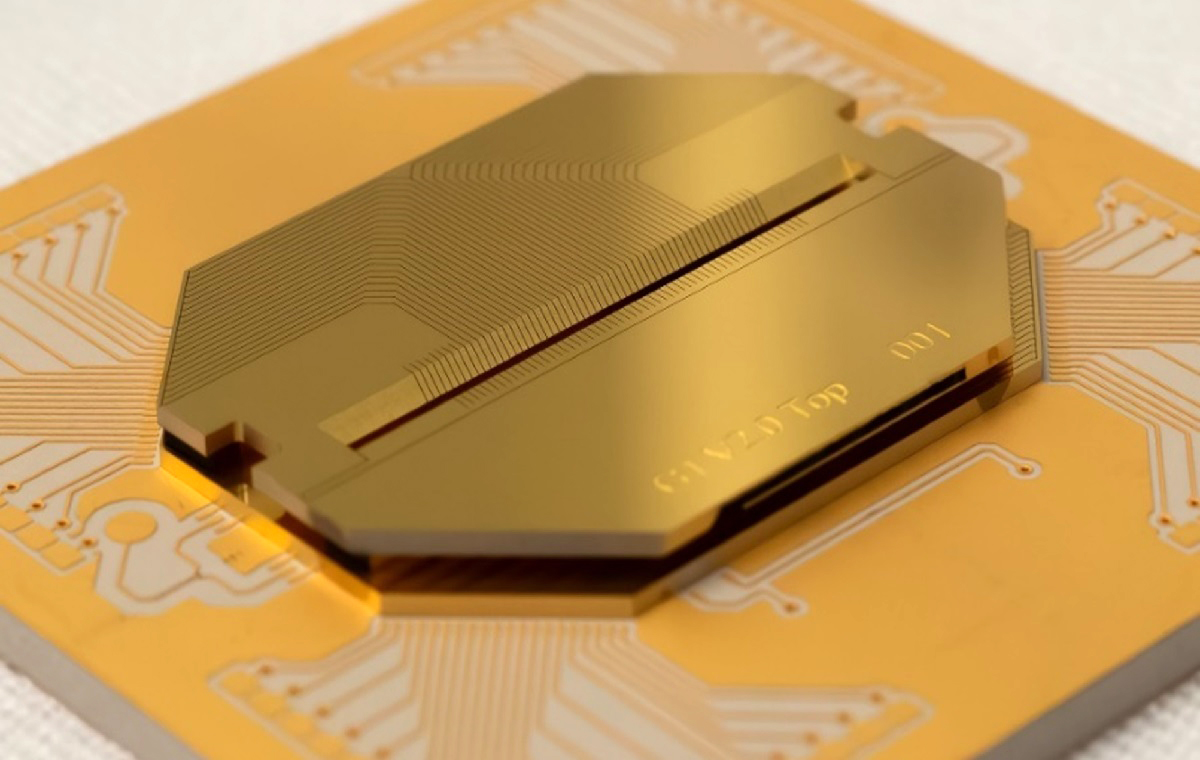
February 11, 2026, marked the kick-off of the SQale project, which is set to significantly advance the field of quantum computing with its approach to developing next-generation ion trap quantum computers. With over 200 interconnected qubits, the project aims to achieve unprecedentedly low error rates for the implementation of NISQ algorithms and the testing of advanced error correction techniques. The joint project between neQxt GmbH and FZ Jülich is funded by the BMFTR with a total of €18.4 million. Within this framework, the FBH is developing a novel laser module that delivers ultrashort pulses.
Quantum computers have enormous potential to overcome the limitations of classical computing. They can provide users with a revolutionary tool for a wide range of tasks, such as chemical simulations, materials research, and optimization tasks. However, all quantum computing systems currently face significant challenges in terms of scaling.
FBH contributes innovative laser module
The SQale project, led by neQxt GmbH, aims to do something about this situation and represents a significant undertaking in the development of the next generation of ion trap quantum computers. The Ferdinand-Braun-Institut is one of the subcontractors and will develop a novel laser module that is expected to play a crucial role in increasing system performance. “We are delighted to be part of this extremely promising project with a unique pocket-sized diode laser module that delivers ultra-short pulses,” explains Dr. Katrin Paschke, Head of the Laser Modules Lab at the Ferdinand-Braun-Institut.
Innovation Hub in the Capital Region
The Airport Region Berlin Brandenburg offers ideal conditions for quantum computing, with its strong ICT expertise and excellent research institutions. Projects like SQale benefit from this environment of innovation, networking, and digital transformation.
For more information on the region's economic development or support for businesses, investors, and research institutions, please contact:
Sandra Koletzki | sandra.koletzki(at)airport-region.de
(Source: Ferdinand-Braun-Institut gGmbH, Leibniz-Institut für Höchstfrequenztechnik, 02|17|2026 | “Scalable quantum computers through a modular approach”)